Deciding between thermal imaging and night vision for predator hunting can be a tough call for any serious outdoorsman. This post dives deep into the pros and cons of each technology, helping passionate hobbyists understand which device will give them the edge in their pursuit of coyotes, hogs, and other nocturnal predators, considering detection, identification, and environmental factors.
Hey there, fellow nocturnal adventurers! If you’re anything like us, the thrill of predator hunting under the cloak of darkness is an addiction. But with technology evolving faster than a coyote chasing a rabbit, a common question echoes through the hunting community: when it comes to spotting those elusive critters, should you go with thermal imaging or night vision? Let’s break it down for the passionate hobbyist looking to gain an unfair advantage.
Understanding the Tech: Heat vs. Light
Before we pit them against each other, let’s quickly understand how these incredible devices work.
Thermal Imaging (The Heat Seeker):
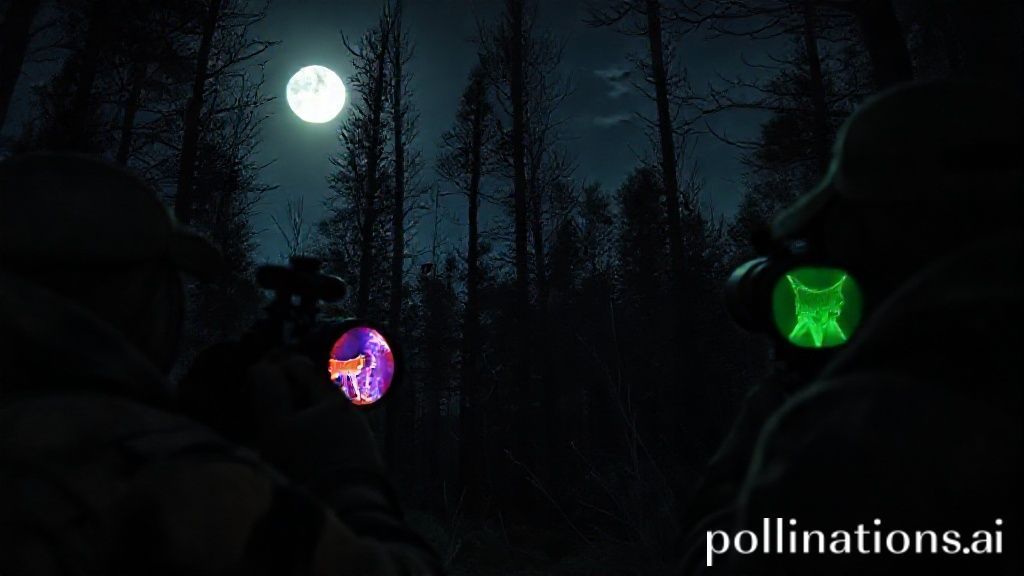
Thermal imagers detect the infrared radiation (heat) emitted by objects. Everything with a temperature above absolute zero emits some form of thermal energy. Your thermal scope doesn't need any ambient light. It literally sees heat.
- Pros:
- Unrivaled Detection: Spots animals through total darkness, light fog, smoke, and even some light cover (bushes, tall grass). If it’s warm, you’ll see it.
- No Light Needed: Works equally well on a pitch-black, moonless night as it does in broad daylight (though daytime use for hunting is less common).
- Stealth: You don’t need an IR illuminator, meaning you’re completely invisible to anything that doesn't have thermal vision.
- Cons:
- Lack of Detail: Everything is a heat signature. Distinguishing between a coyote, a deer, or a large dog can be challenging until you're much closer.
- Cost: Generally more expensive, especially for quality units.
- Battery Life: Can be a concern with continuous use.
- Environmental Factors: Heavy rain can temporarily obscure heat signatures.
Night Vision (The Light Amplifier):
Night vision devices (NVDs) work by amplifying available ambient light – starlight, moonlight, even distant city glow. They collect tiny amounts of light, convert them into electrons, multiply them, and then project them onto a phosphor screen, creating that iconic green-tinted image.
- Pros:
- Excellent Detail & Identification: You see the world as it is, just brighter. This makes identifying targets, terrain, and distances much easier. You can often tell the difference between a male and female, or even specific markings.
- Natural View: The green image offers a very natural depth perception compared to the flat thermal view.
- Lower Entry Cost: You can get into decent night vision for less than quality thermal.
- Cons:
- Needs Light: If there’s absolutely no ambient light (e.g., inside a dense, dark forest on a cloudy, moonless night), you’ll need an IR illuminator, which can be visible to animals with good night vision.
- Limited Through Obstacles: Doesn't "see" through fog, smoke, or light cover any better than your naked eye.
- Performance Varies: Gen 1, 2, and 3 night vision have significant differences in clarity and range, with Gen 3 being top-tier but costly.
The Showdown: Thermal vs. Night Vision for Predator Hunting
Now, let's get down to the brass tacks for predator hunters.
-
Detection – Thermal WINS (Hands Down):
For scanning vast fields or dense brush for any sign of a warm body, thermal is king. You’ll pick up coyotes, hogs, or bobcats that would be completely invisible to night vision, especially in areas with tall grass or light foliage. This is crucial for initial spotting. -
Identification – Night Vision WINS (Usually):
Once you’ve detected a heat signature with your thermal, you often need to confirm what it is. Is it your target predator, a protected animal, or even someone’s lost pet? This is where night vision shines. Its ability to render detail allows for much clearer identification, reducing the risk of a mistaken shot. Many hunters use thermal for scanning and then switch to night vision (or a weapon-mounted NV scope) for positive ID before taking a shot. -
Environmental Factors:
- Fog/Smoke: Thermal slices through light fog and smoke, where night vision struggles.
- Heavy Rain/Humidity: Can degrade thermal performance slightly as moisture absorbs heat. Night vision can struggle with glare from rain.
- Cover: Thermal is superior for seeing through light brush or tall grass. Night vision is blocked by physical obstacles just like daylight vision.
-
Cost & Versatility:
While thermal entry costs are higher, modern thermal scopes are incredibly versatile, offering impressive detection ranges. Night vision offers more detailed observation and often a more natural feel for navigating in the dark if you're not solely focused on spotting heat.
The Verdict for the Passionate Hobbyist
So, which one should you choose? It honestly depends on your primary goal and budget.
-
If your priority is pure detection and finding animals in challenging conditions (dense cover, complete darkness), go thermal. It’s unparalleled for locating heat signatures at impressive distances. Many hunters use a thermal monocular for scanning and a separate weapon-mounted optical scope (or sometimes a thermal weapon sight) for the shot.
-
If your priority is positive identification, clearer navigation, and you often hunt in more open terrain with some ambient light, night vision is an excellent choice. It allows you to really see the animal and its surroundings.
The Hybrid Approach (The Dream Setup):
For the serious, dedicated hobbyist who wants the absolute best, the ideal setup often involves both. Use a handheld thermal monocular for wide-area scanning and quick detection, then transition to a weapon-mounted night vision scope (or a higher-end thermal scope with better detail) for positive identification and the shot. This combination gives you the best of both worlds: the superior detection of thermal and the detailed identification of night vision.
Ultimately, both technologies are incredible tools that can dramatically increase your success rate and enjoyment of predator hunting. Consider your typical hunting environments, target species, and budget, and you'll find the right fit to conquer the night! Happy hunting!