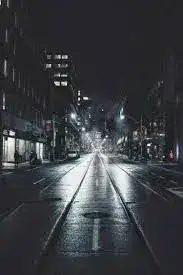
Learn the street photography secret: Stop chasing people. Master composition by finding the perfect background first, turning the environment into your stage.
Stop Looking at People! The Secret to Great Street Photos is Hunting the Perfect Background First
The urge is powerful, isn't it? We see someone interesting—a person with a striking coat, a unique stance, or an intense expression—and we immediately lift the camera and try to follow them, often resulting in a hurried, unbalanced, and ultimately disappointing photograph. This is the common, rookie mistake in street photography: treating the subject as the whole story. What if I told you the secret to consistently great street photos has almost nothing to do with the people themselves, but rather the empty space before they even arrive? The most successful street photographers aren't just great at capturing fleeting moments; they are masters of setting the stage. They hunt for the perfect theatrical backdrop, lock down their composition, and then, and only then, wait for the perfect actor to walk into the frame. This shift in methodology—from chasing subjects to patiently hunting environments—is the single most transformative technique you can adopt today.
The Street Photography Paradigm Shift: Background as Premise
For most beginners, the primary driver for releasing the shutter is the presence of an intriguing person. But in street photography, the subject is often just the decisive element that completes the scene; the background is the premise, the narrative context, and the foundation of the composition. Without a compelling foundation, even the most captivating character is just a distraction against visual noise.
Why We Chase Subjects (And Usually Fail)
Chasing subjects forces you into reactive mode. You are moving, your settings might be wrong, and you are inherently prioritizing speed over structure. The resulting image often suffers from three major flaws: terrible framing (because you didn't have time to refine edges), distracting backgrounds (because you focused only on the person), and poor lighting (because you didn't choose a spot based on the light's quality). You’re reacting to movement, not designing a photograph. The goal is to move from being a photojournalist documenting an event to being a visual architect designing a scene.
The Background as the Stage
Think of your camera lens as a theater director choosing the stage design before the actors are even cast. The background defines the mood, the color palette, and the visual geometry of the final image. A well-chosen background offers leading lines, strong geometric shapes, reflections, or intense shadows that elevate a mundane moment into art. If the background can stand alone as an interesting abstract photograph, then when a human element enters the frame, the resulting image becomes exponentially stronger.
Phase 1: Background Hunting – Seeing the Environment Differently
This first phase requires patience and a conscious effort to ignore the moving chaos around you for five minutes. You are hunting for compositional perfection, treating the city as a series of static sculptures waiting to be framed.
Lines, Shapes, and Geometry
Look for the structure. Are there strong diagonal lines created by a staircase or railing? Can you frame a person perfectly within a doorway or arch? Geometry is the skeleton of strong composition. When you find intersecting lines, reflections that create symmetry, or repeated patterns, stop. This is your spot. Visualize where a person would need to stand to complete the image, perhaps by counterbalancing a large shape or standing exactly on a vanishing point.
The Power of Negative Space
Negative space is your friend in the busy street environment. Look for large, clean, uniform areas—a massive, unblemished wall, an expansive patch of shadow, or a bright blue sky framed between buildings. Negative space gives your subject room to breathe and dramatically increases the impact of their presence. When hunting backgrounds, prioritize clean backgrounds over busy ones. If a background is busy, ensure it is layered in a way that creates depth, not cluttered in a way that destroys focus.
Light and Shadow: The Background's Mood Makers
Lighting should be your primary concern. A great background is defined by the quality of light falling upon it. Are there deep, dramatic shadows (ideal for high-contrast B&W)? Is the light raking across a textured wall, revealing depth? Are there pools of soft, diffused light? Identify pockets of beautiful light. These illuminated areas become the precise spots where you hope your subject will momentarily pause. Often, the composition hinges not on what the subject is, but on where they stand in relation to that patch of perfect light.
Phase 2: Setting the Trap – Positioning and Waiting
Once you have found your perfect stage, you must become the invisible hunter. This phase is about discipline: locking down the technical aspects so you can focus purely on the human element.
The Rule of Waiting: Patience is Composition
Street photography is a game of probability. By fixing your composition, you convert the variable of location into a constant, allowing you to focus all your energy on the variable of timing. Find your spot, frame your shot (making sure the edges of the frame are perfect—no distracting elements creeping in!), and wait. Sometimes the wait is 30 seconds; sometimes it's 30 minutes. The difference between a good shot and a great shot is often the quality of the subject that eventually enters your pre-composed frame. If someone walks in too quickly or stops too long, you wait for the next person.
Locking Down Your Settings
Since you know exactly where the subject will be (in relation to the background you chose), you can set your exposure perfectly. Use Aperture Priority (Av/A) or Manual (M) mode. Since you are likely waiting for a sharp subject, prioritize a fast shutter speed (1/250s or higher) and use zone focusing or set your focus point precisely on the spot where you anticipate the action will occur. By pre-setting everything, you remove the technical burden when the moment arrives, allowing you to shoot purely instinctually.
Framing for the Subject That Doesn't Exist Yet
When framing, leave space for the story. If you’ve found a powerful diagonal line on the left side of the frame, leave the right two-thirds open for the subject to walk into, creating balance and movement. If you are shooting against a dramatic silhouette, ensure there is adequate negative space around the silhouette's eventual position. It’s like composing a musical score with a planned empty rest—the silence highlights the next note.
Phase 3: Capturing the Moment (The Decisive Element)
This is where the subject finally comes into play, but they are viewed as a complementary element, not the main event. Your primary focus remains on the relationship between the person and the pre-chosen environment.
When to Release the Shutter
The shutter release is dictated by two things: composition and narrative. Compositionally, you release the shutter when the person is perfectly positioned—filling the negative space you planned, hitting the light patch, or completing the geometry. Narratively, you look for a fleeting interaction, a gesture, or an expression that adds meaning to the scene. The best street photographs are those where the subject interacts with the background, whether through scale, color, or physical placement.
Managing Distraction vs. Complement
If a person walks into your frame but clashes violently with the background—maybe their vibrant red jacket distracts from the quiet, monochromatic tones of the wall—you let them pass. You must be ruthless. Only subjects that complement or contrast powerfully (and intentionally) with your background are keepers. Remember, the background is the standard; the subject must meet it.
Advanced Techniques: Layering and Depth
Once you master the background-first approach, you can evolve your hunting to incorporate depth and complexity.
Using Foreground Elements
To add genuine depth, look for backgrounds that also allow for interesting foreground elements. This might be a fence, a window frame, or foliage that you shoot through. Using a foreground element adds a visual layer that grounds the viewer in the scene and makes the static background feel three-dimensional. When you choose your background, look behind you—is there something you can use to frame the shot?
Creating Contextual Narratives
The background should tell half the story. If you are shooting a busy financial district, the subject should appear dwarfed by the environment, speaking to themes of modern isolation. If you are shooting a colorful, historic district, the subject’s clothing or behavior should either harmonize with or dramatically disrupt that history. By carefully selecting the background, you are choosing the theme of your photograph, and the subject simply provides the final, specific point of view on that theme.
Conclusion: Change Your Mindset, Change Your Photos
Stop rushing. Stop chasing. The street is a massive studio, and great street photography is less about luck and more about design. When you next walk out with your camera, put the people out of your mind. Instead, seek the perfect stage: the striking light, the clean geometry, the contrasting shadow. Find that structure, lock down your frame, and wait. When the right subject arrives, they won't just be a person in a picture; they will be the perfect, final brushstroke on a canvas you meticulously prepared. This disciplined approach elevates your work from snapshots to deliberate, lasting art.