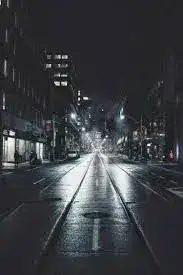
Test the limits of your street photography skills! I took a 30-minute challenge to find the decisive moment. Learn my techniques, pitfalls, and essential tips for high-pressure shooting.
Can You Capture the Decisive Moment in 30 Minutes? (My Ultimate Street Photo Challenge
The concept of "The Decisive Moment," coined by the master of street photography, Henri Cartier-Bresson, defines that fleeting, single instant when composition, light, and human action align perfectly. It’s the holy grail for anyone who loves capturing life unposed. But the reality is, street photography often involves long, meditative waits, slow walking, and hours spent soaking up the atmosphere. It's the antithesis of speed.
So, what happens if you introduce a brutal time constraint? Can you force serendipity? I recently decided to take the ultimate test: finding and capturing a truly decisive moment in just 30 minutes, working in a bustling urban environment. This wasn't about snapshots; it was about focused intention under intense pressure. This is the story of that challenge—what I learned, what I missed, and whether the clock is a photographer’s enemy or their ultimate muse.
Why the 30-Minute Time Limit is a Game Changer
For many photographers, especially those who struggle with gear paralysis or overthinking, time is a liability. We often spend too long adjusting settings, second-guessing locations, or deleting photos we haven't even taken yet. The 30-minute constraint burns away the procrastination. It forces three crucial psychological shifts:
Urgency Over Analysis
When the clock is ticking, you don't have time to worry if your depth of field is perfect or if this location is the best in the city. You accept the scene in front of you and prioritize being ready. This urgency sharpens your focus and trains your eye to spot potential compositions much faster.
Commitment to the Shot
Because the window is small, you must commit to every interesting situation you encounter. There’s no time to circle back or wait for a better opportunity just around the corner. If you see good light and an interesting background, you stick there and work the scene until the timer forces you to move.
The Hyper-Focus Effect
Think of it as the photographic equivalent of sprinting. You enter a state of flow where only two things matter: movement and light. All unnecessary distractions—checking your phone, reviewing past shots, fiddling with menus—disappear. This hyper-focus dramatically increases the likelihood of observing a unique interaction.
Pre-Challenge Prep: The 5-Minute Setup
Before I even hit the start button on my timer, preparation was key. If you waste even five precious minutes fiddling with settings, the challenge is over before it begins.
Gear Simplification
I opted for a single camera body and one prime lens (35mm equivalent). Zoom lenses waste time; the prime forces me to move my feet and think compositionally. I left the camera bag behind, carrying only essential spare batteries and one extra SD card in my pocket. Minimalism is mandatory for speed.
Mastering the Manual Settings
While shooting full manual is ideal for control, speed dictates efficiency. For this challenge, I used Aperture Priority (Av) set to f/8. This gives me sufficient depth of field (zone focusing) for the majority of street scenes and ensures the camera handles changing light conditions quickly. I set my ISO to Auto, capped at 6400 to maintain workable shutter speeds (minimum 1/250th of a second) and freezing action.
- The Hyperfocal Sweet Spot: By setting the aperture to f/8 and pre-focusing on a point about 10 feet away, everything from roughly 5 feet to infinity is acceptably sharp. This technique eliminates the lag of autofocus, allowing me to raise the camera and shoot instantly based on instinct.
The Clock Starts: Strategy on the Move (0–15 Minutes)
I started the clock in the busiest central square, a hub of commuters and shoppers. My strategy was two-fold: Hunting and Fishing.
Phase I: The Hunter (Minutes 0–7)
The first phase is reconnaissance. I moved quickly but deliberately through the main arteries, looking for two things: strong directional light (shadows are crucial in Bressonian photography) and interesting architectural elements that could serve as clean, graphic backgrounds. I didn’t stop to shoot yet, but I kept the camera ready at chest level, finger on the shutter release.
The lesson here: Don't chase people, chase the light and the framework. People are random; light is predictable.
Phase II: The Fisher (Minutes 7–15)
Having identified a specific spot—a patch of sunlight hitting a vibrant blue wall with a narrow, deep shadow line—I stopped. This is where I switched from moving to observing. The Fisherman strategy involves planting yourself in an area with high potential and waiting for the frame to be completed by human action. It’s a test of patience, ironically, within a test of speed.
During this time, I focused entirely on pre-visualizing the decisive moment. I framed the blue wall, imagining a figure passing through the exact line where sun met shadow. I shot several frames of purely compositional elements (the shadow lines, the wall texture) just to solidify the composition and ensure my exposure was locked.
The Mid-Game Intensity (15–25 Minutes)
This is the hardest part of the challenge. The initial adrenaline wears off, and the reality of the constraint sets in. I had taken maybe 20 frames, mostly good compositions, but nothing that screamed decisive.
Dealing with Near Misses
At minute 18, a woman carrying a large bouquet of red roses walked perfectly into my pre-visualized spot. I raised the camera, focused, and pressed the shutter... just as she stopped to check her phone. The energy vanished. It became a posed portrait, not a spontaneous moment.
The pitfall: Street photography requires anticipating the moment before it happens. My reaction time was too slow by a hair, letting analysis creep back in.
I forced myself to move again. The Fisherman spot had dried up. I started moving down a side street, utilizing the final ten minutes for pure instinctual shooting. I relied completely on my preset f/8 zone focus. If I saw it, I shot it.
The Power of Juxtaposition
I turned a corner and saw a man wearing a bright orange reflective vest leaning against a massive column of neoclassical architecture. The contrast between the stark, formal column and the modern, working-class figure was compelling. I didn’t wait for him to move; I shot him in his current state of contemplation. This wasn't the decisive moment of movement, but it was a decisive moment of juxtaposition—the perfect meeting of two contrasting themes in one frame.
The Final Sprint: Did I Capture the Decisive Moment? (25–30 Minutes)
With five minutes remaining, I was heading back toward my starting point, slightly deflated. I had strong images, but nothing that felt truly Bressonian—no peak of action or profound geometry tied to motion.
Then, I heard it: a flash of laughter. Three children were running out of a nearby cafe, chasing a small dog. The key element was the geometry: they were passing under a massive, low-hanging clock, and the dog was running directly toward the center of the frame, framed by the legs of one child, and the hand of another reaching out.
I snapped three rapid frames. The third one was it. The dog airborne, the children’s expressions mid-laugh, and the hands forming a natural frame around the action, all perfectly centered beneath the giant circular clock face.
- Analysis of the Shot:
-
Geometry: The clock face and the triangular formation of the running children provided strong geometric structure.
-
Action: The peak moment of the dog's leap and the children's chase.
-
Composition: Everything that mattered was in the frame, nothing distracting was on the edges, thanks to the tight 35mm composition.
It was chaotic, spontaneous, and compositionally sound—the definition of the decisive moment.
Three Core Lessons Learned from the 30-Minute Sprint
This high-pressure challenge revealed fundamental truths about street photography that are often obscured by casual practice. If you want to improve your instinct, try this challenge.
1. Simplification Drives Creativity
The most important lesson is that complicated gear and settings slow down your mind. By locking in f/8 and utilizing zone focus, I removed the analytical burden of focusing and aperture calculation. This allowed 100% of my mental capacity to be dedicated to observing the scene, anticipating movement, and framing the shot. If your technique is muscle memory, your vision can be spontaneous.
2. Patience Must Be Ready, Not Slow
The 30-minute challenge forces you to distinguish between lazy waiting and prepared waiting. When I was fishing (planting myself at the blue wall), I wasn’t scrolling through my phone; I was holding the camera, slightly pre-composed, waiting for the visual tension to arrive. Patience in this context means being mentally ready to trigger the shutter the instant the scene completes itself.
3. The Decisive Moment Can Be Static
While we often associate the decisive moment with peak action (the leap, the turn, the jump), my shot of the man by the column reminded me that the moment can also be about a profound, instantaneous convergence of atmosphere, light, and contrasting elements. If the composition is flawless and the juxtaposition is striking, the moment is just as decisive as a motion blur.
Your Turn: Take the 30-Minute Challenge
The 30-minute street photography challenge is more than just a novelty; it’s a powerful training tool for honing your instincts, simplifying your workflow, and teaching you the absolute necessity of preparation. You won't get a masterpiece every time, but you will learn to trust your gut and react faster than your brain. Grab your camera, set that timer, and see if you can capture the magic of the fleeting instant. Good luck—and tell me what you find!