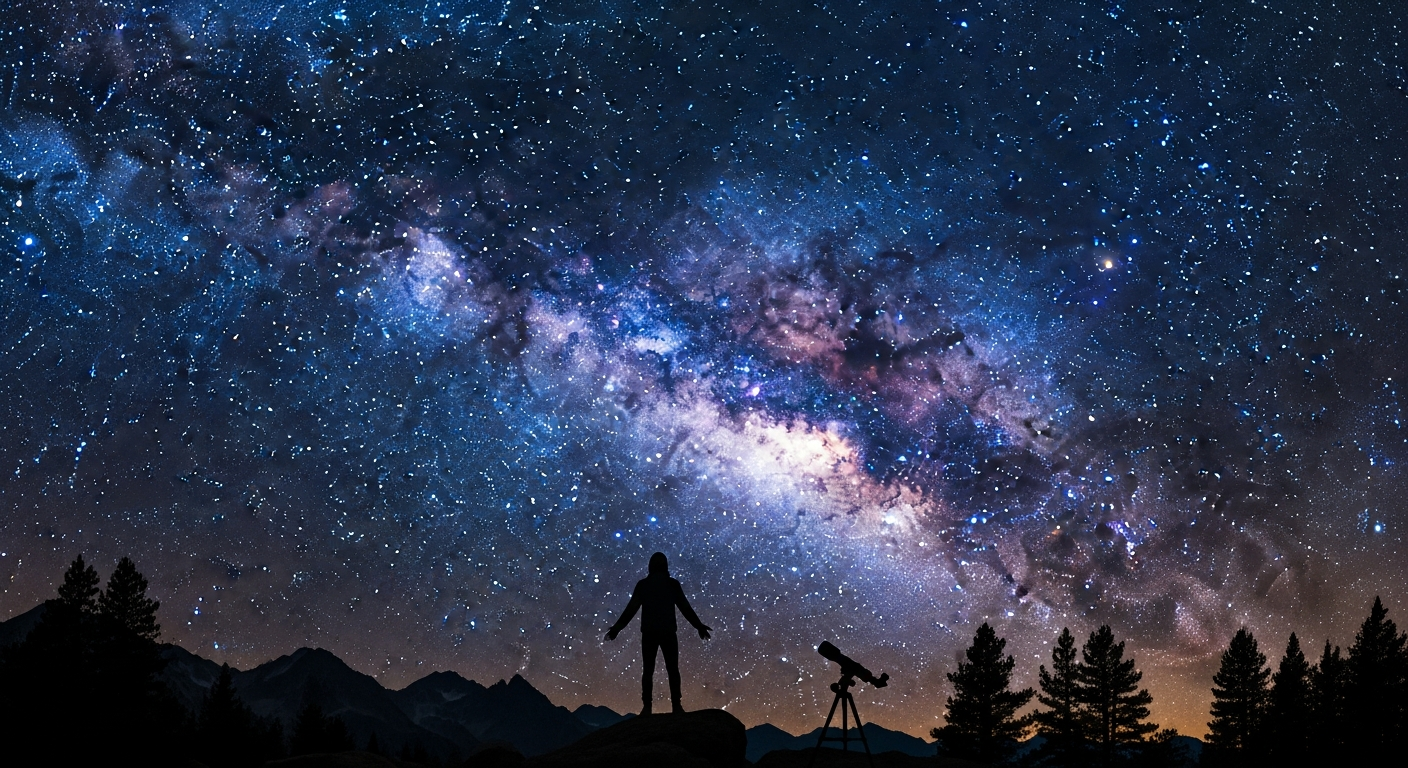
Unlock the cosmos! This in-depth guide for passionate stargazers reveals expert tips on scouting prime dark-sky locations and mastering the art of locating breathtaking celestial wonders, from elusive nebulae to distant galaxies.
For the dedicated amateur astronomer, the universe is an endless canvas waiting to be explored. But how do you maximize your cosmic canvas experience? It starts with two key missions: finding the perfect dark-sky sanctuary and mastering the art of celestial navigation.
The Quest for Darkness: Finding Your Cosmic Sanctuary
Light pollution is the bane of every stargazer. Your quest begins by escaping it.
- Bortle Scale is Your Best Friend: This nine-level scale quantifies sky darkness. Aim for Bortle 4 or lower for a truly rewarding experience. Websites like lightpollutionmap.info are invaluable resources to pinpoint genuinely dark skies near you.
- Go Remote: National parks, state forests, and designated International Dark Sky Parks offer pristine conditions. Research local regulations, accessibility, and always prioritize safety – inform someone of your plans.
- Local Astronomy Clubs: These are goldmines of information. Members often know hidden gems and frequently organize public stargazing events at prime, often privately accessed, dark-sky locations.
- Weather Wisdom: Clear, moonless nights away from city glow are paramount. Beyond simple cloud cover, check atmospheric 'seeing' conditions (how stable the air is) for optimal telescopic views. Apps and specialized forecasting sites can help.
Navigating the Celestial Sphere: Unveiling Wonders
Once you're under a truly dark sky, the real adventure begins.
-
Essential Tools in Your Arsenal:
- Star Charts & Apps: A good planisphere or mobile applications like SkyView, Stellarium, or Star Walk 2 are crucial for identifying constellations, planning your observation route, and even pinpointing obscure objects.
- Binoculars: Before you even consider a telescope, a quality pair of 7x50 or 10x50 binoculars will reveal countless star clusters, nebulae like the Orion Nebula, and even the Andromeda Galaxy as a smudge. They're excellent for wide-field scanning.
- Telescope: For deeper dives, a telescope opens up a universe of intricate detail – planetary features, distant galaxies, and delicate nebulae. A Dobsonian is often recommended for beginners due to its simplicity and aperture for its price.
-
Mastering Star Hopping: This classic technique uses known bright stars to 'hop' your way to fainter, harder-to-find objects. Start at a familiar constellation, then use your charts or app to trace a path through progressively fainter stars until you reach your target. It's an art that improves with practice!
-
Key Targets for Every Season:
- Naked Eye: The breathtaking arc of the Milky Way (best in summer), prominent constellations (Orion in winter, Cygnus in summer), bright planets (Jupiter, Saturn, Mars, Venus), and spectacular meteor showers.
- Binocular Gems: The Pleiades (M45), Orion Nebula (M42), Andromeda Galaxy (M31), the Double Cluster (NGC 869/884), and numerous open clusters.
- Telescopic Treasures: Lunar craters and mountains, Jupiter's cloud bands and Galilean moons, Saturn's majestic rings, vibrant globular clusters (M13, M3), ethereal planetary nebulae (M57 Ring Nebula), and various distant galaxies (M81/M82).
-
Patience is Your Virtue: Some objects are incredibly faint. Allow your eyes to fully dark-adapt (at least 20-30 minutes in complete darkness, avoiding any white light). Use only red-light flashlights, which preserve your night vision.
Beyond the Basics: For the True Enthusiast
- Keep a Logbook: Document your observations – date, time, location, sky conditions, objects seen, and your personal impressions. This practice refines your observational skills and creates a cherished personal record of your cosmic journey.
- Astrophotography: Even with a smartphone and a simple tracking mount, you can begin capturing stunning images of the night sky. For deeper dives, dedicated cameras and specialized mounts open up incredible possibilities.
- Join a Community: Connect with fellow stargazers. Share your passion, learn from experienced observers, and participate in star parties. The collective knowledge and shared wonder can elevate your hobby to new heights.
The universe is vast and waiting. With these secrets, you're not just looking at the stars; you're embarking on an incredible journey of discovery and connection with the cosmos. Happy stargazing!