From the quiet focus of angling to the deep immersion of a good book, hobbyists share a common thread: a passion for discovery and creation. Dive into the world of wheel-thrown pottery, where the ancient Japanese aesthetic of Wabi-Sabi transforms 'imperfections' into celebrated hallmarks of beauty and authenticity.
Wheel Thrown Pottery: Embracing the Wabi-Sabi Aesthetic
No matter your passion—whether you're meticulously tying flies, tending a thriving garden, or losing yourself in the pages of a beloved novel—there's a profound satisfaction in the process, the learning, and the unique outcomes of your dedication. Today, let's explore wheel-thrown pottery through the lens of an aesthetic that resonates deeply with the soul of a true hobbyist: Wabi-Sabi.
The Dance of Clay and Centering
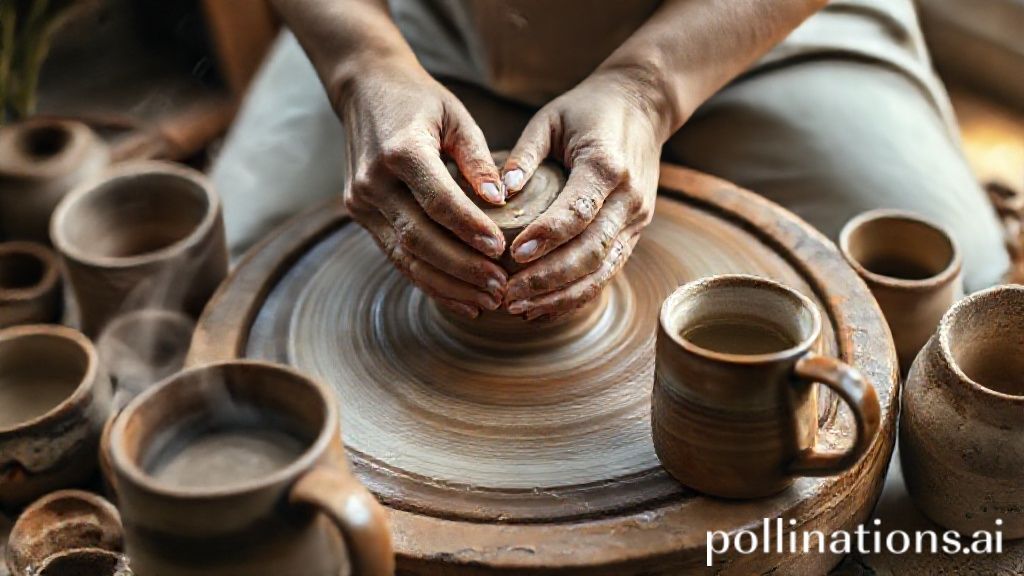
For those unfamiliar, wheel-thrown pottery is a mesmerizing craft where a lump of clay is centered on a spinning wheel and shaped by the potter's hands. It's a meditative practice, requiring focus, patience, and a delicate touch. The initial challenge of centering the clay teaches a fundamental lesson: control isn't about dominance, but about harmonious guidance. Every wobble, every slight deviation, offers an opportunity for adjustment and learning.
What is Wabi-Sabi?
Wabi-Sabi is an ancient Japanese aesthetic that finds beauty in imperfection, impermanence, and incompleteness. It celebrates the authenticity of natural processes, the quiet dignity of age, and the charm of the understated. Think of a weathered old barn, a moss-covered stone, or a crack in a beloved teacup that tells a story. Wabi-Sabi isn't about making things perfect; it's about seeing the inherent beauty in their unique, flawed existence.
Embracing Wabi-Sabi on the Wheel
This philosophy is wonderfully suited to pottery. On the wheel, the clay often dictates its own path to some extent, and the potter, rather than fighting it, learns to listen and adapt. A slightly uneven rim, a subtle fingerprint left behind, the organic texture of unglazed clay, or an accidental drip of glaze—these are not 'mistakes' to be hidden but rather 'features' to be cherished.
- Irregularity is Charm: Instead of striving for machine-like symmetry, Wabi-Sabi encourages the unique, hand-formed qualities that make each piece one-of-a-kind. It's the slight asymmetry that gives a bowl character.
- Natural Textures: The raw, unglazed clay surface, the marks of tools, or even the subtle texture left by your fingers become part of the piece's story.
- The Beauty of Age: Over time, a Wabi-Sabi pot might chip or crack. Instead of discarding it, one might practice Kintsugi, the art of repairing pottery with gold, celebrating the break as part of its history rather than concealing it.
- Simplicity and Understatement: Wabi-Sabi pieces often feature muted, earthy tones and minimalist forms, allowing the natural beauty of the material to shine through.
A Philosophy for All Hobbies
The principles of Wabi-Sabi extend far beyond the pottery studio. For the angler, it's the beauty of a hand-tied fly that's caught countless fish, now a little frayed but full of memories. For the gardener, it's the gnarled branch of an old fruit tree, still bearing fruit despite its age. For the bookworm, it's the comforting sight of a well-loved book, its pages dog-eared and spine creased from many readings.
Embracing Wabi-Sabi in your craft, whatever it may be, encourages you to cherish the journey, celebrate the imperfections, and find profound beauty in the authentic, unique expressions of your passion. So, next time you're creating, remember that the most beautiful things often carry the stories of their making within their very fabric.