An essential guide to understanding the fundamental rules of pickleball, covering scoring, serving, faults, court layout, and general gameplay mechanics to help new players get started and enjoy the game.
Decoding the Dink: Your Comprehensive Guide to the Basic Rules of Pickleball
Welcome to the wonderful world of Pickleball! If you've ever found yourself intrigued by the rhythmic "thwack" of paddles and the joyous laughter emanating from a nearby court, you're not alone. Pickleball has exploded in popularity, captivating millions with its unique blend of tennis, badminton, and table tennis. It's easy to learn, highly social, and offers a fantastic workout for all ages and skill levels.
But before you step onto the court and dive into the fun, understanding the basic rules is absolutely essential. While the game is simple to pick up, a few key regulations differentiate it from other racket sports and are crucial for enjoyable, fair play. This comprehensive guide will walk you through everything you need to know, from the court layout to the intricate dance of serving and scoring, ensuring you're ready to play like a seasoned pro in no time. So, grab your paddle (or imagine you have one), and let's unravel the delightful mysteries of Pickleball!
The Court and Equipment: Your Arena and Tools
Before we delve into the action, let's get acquainted with the playing field and the gear you'll be using.
The Pickleball Court
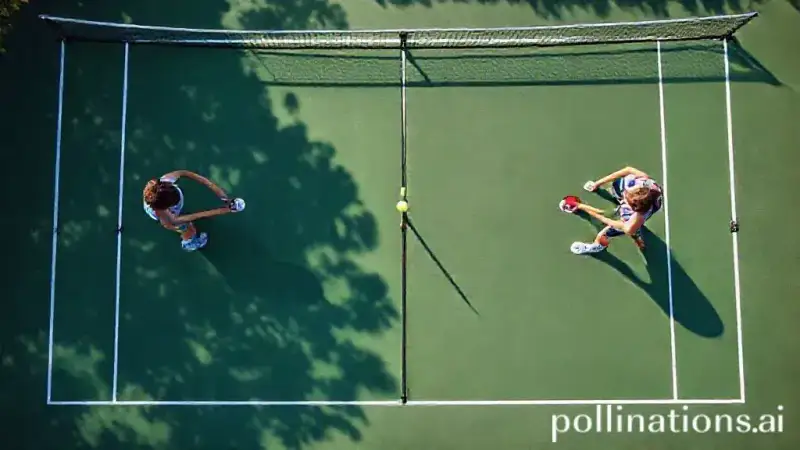
The Pickleball court is a compact and efficient space, mirroring the dimensions of a badminton doubles court.
-
Dimensions: It's 20 feet wide and 44 feet long. These precise measurements ensure a fast-paced game that's easy to cover.
-
The Net: A net divides the court in half, standing 36 inches high at the sidelines and dropping slightly to 34 inches in the center. This slight dip is characteristic of Pickleball and influences shot placement.
-
Baselines and Sidelines: These define the outer boundaries of the court. A ball landing outside these lines is considered "out."
-
Service Courts: On each side of the net, the court is divided into two service courts by a centerline. When serving, the ball must land diagonally opposite into the opponent's service court.
-
The Non-Volley Zone (NVZ) – The "Kitchen": This is arguably the most unique and critical area of the Pickleball court. It's a 7-foot zone extending from the net on both sides. Understanding the rules of the kitchen is paramount to playing correctly, and we'll dive deep into it shortly.
The Equipment
You don't need much to get started, which is part of Pickleball's appeal!
-
The Paddle: Pickleball paddles are solid, typically made from composite materials like graphite or fiberglass, and are larger than a ping-pong paddle but smaller than a tennis racket. They lack strings and have a solid hitting surface, providing excellent control and power.
-
The Ball: The Pickleball itself is a lightweight, plastic, perforated ball, similar in appearance to a Wiffle ball. Indoor balls are generally softer with larger holes, while outdoor balls are slightly harder with smaller holes, designed to withstand wind better. The unique flight of the ball contributes significantly to the game's distinctive feel.
Now that we know our surroundings, let's get into the game itself!
Serving It Up: How to Start a Point
The serve is the launching pad for every point in Pickleball, and it comes with its own specific set of rules.
The Serve Mechanics
The Pickleball serve is distinct and has strict requirements:
-
Underhand Motion: The serve must always be executed with an underhand stroke. This means your arm must move in an upward arc, with the paddle head below your wrist when striking the ball. Think of it like a gentle scoop, not an overhand smash.
-
Contact Below the Waist: The ball must be contacted at or below the waist level. This rule, combined with the underhand motion, keeps the serve relatively controlled and prevents overpowering shots from the get-go.
-
No Bounce Serve: You are not allowed to bounce the ball before serving it. You must drop or toss the ball and hit it directly out of the air. (Some relaxed recreational play might allow a single bounce, but officially, it's a direct hit).
-
Diagonal Direction: The serve must be hit diagonally cross-court, landing within the opponent's service court (the area defined by the sideline, centerline, and non-volley zone line). If it lands outside these boundaries, it's a fault.
-
Net Clearance: The ball must clear the net. If it hits the net and fails to land in the correct service court, it's a fault. If it hits the net and does land in the correct service court, it's called a "let" serve and is replayed. However, this "let serve" rule has been eliminated in official play for some time now; any serve hitting the net is a fault, regardless of where it lands. For beginner and recreational play, many still use the "let" rule to keep the game flowing. Always clarify with your group. For this guide, we'll stick to the official rule: a serve hitting the net is a fault.
Serving Order and Scoring
Pickleball's scoring system is one of its most unique aspects, heavily tied to the serve.
-
Only the Serving Team Scores: This is a golden rule! A point can only be scored by the team (or player, in singles) that is serving. If the receiving team wins a rally, they don't score a point; instead, they win the right to serve, and the serving team loses their serve.
-
Keeping Score: In doubles, the score is always called out as three numbers: "Serving Team Score - Receiving Team Score - Server Number." For example, "3 - 2 - 1" means the serving team has 3 points, the receiving team has 2 points, and it's the first server's turn.
-
Starting the Game: At the very beginning of a doubles game, only one player from the initial serving team gets to serve. This is often referred to as "starting with one serve." If they fault, the serve immediately goes to the opposing team. After this initial serve, both players on a team will get a chance to serve before the serve passes to the opponents.
-
Serving Progression (Doubles):
- The first server serves until they (or their team) commit a fault.
- If it was the first server, their partner (the second server) then serves until they (or their team) commit a fault.
- Once the second server faults, the serve goes over to the opposing team. This is called a "side out."
- When a side out occurs, the player on the right side of the court (who was on the right when they last served) starts serving for the new serving team.
-
Serving Progression (Singles):
- The player serves until they commit a fault.
- When a fault occurs, it's a "side out," and the serve goes to the opponent.
Understanding this serving and scoring rotation is critical for keeping track of the game and playing fairly.
The Dance of the Ball: Key Rules During Play
Once the serve is in play, several fundamental rules govern the rally, dictating how the ball must be hit and where players can stand.
The Double-Bounce Rule (or Two-Bounce Rule)
This is one of the most distinctive and often initially confusing rules for newcomers. It's designed to prevent an immediate advantage for the serving team and promote longer rallies.
-
Serve Bounce: The served ball must bounce once on the receiver's side before it can be returned. The receiving player cannot volley (hit the ball out of the air) the serve.
-
Return Bounce: After the receiver returns the ball, the serving team must also let the ball bounce once on their side before they can hit it. They, too, cannot volley the first return.
-
After the Two Bounces: Once these two mandatory bounces have occurred (one on each side after the serve), players are then free to hit the ball either as a volley (out of the air) or after one bounce on their side.
Why is this rule so important? It forces players to stay back from the net initially, preventing aggressive net play right after the serve. This often leads to more strategic dinking and softer shots, which are hallmarks of Pickleball. Failing to observe the double-bounce rule results in a fault.
The Non-Volley Zone (NVZ) – "The Kitchen" Rules
The "Kitchen" is the 7-foot zone on either side of the net, and its rules are the heart of Pickleball strategy.
-
What is a Volley?: A volley is hitting the ball out of the air before it bounces on your side of the court.
-
The Primary Kitchen Rule: A player cannot volley the ball while standing within the non-volley zone or while touching the non-volley zone line. This includes any part of your body or your paddle if it's considered part of your person.
-
Momentum Rule: If you volley the ball while outside the kitchen, but your momentum carries you into the kitchen (or causes you to touch the line) after hitting the ball, it is still a fault. You must establish control of your body and stop your forward motion before touching the NVZ.
-
Bouncing Ball in the Kitchen: If the ball bounces in the kitchen, you can enter the kitchen to hit it after it bounces. After hitting it, you can remain in the kitchen. The restriction only applies to volleys.
-
Reaching Over the Kitchen: You can reach over the non-volley zone line to hit a ball, as long as your feet (and any part of your body or paddle that is considered an extension of your body for balance/support) are not touching the line or inside the zone when you make contact.
-
Faults Related to the Kitchen:
- Volleying while standing in the kitchen.
- Volleying and then stepping into or touching the kitchen line due to momentum.
- Hitting the ball into the net while in the kitchen zone.
The kitchen rule encourages dinking (soft shots that land just over the net in the opponent's kitchen), strategy, and precise shot placement, rather than relying solely on power. Mastering the kitchen rules is a key step to becoming a good Pickleball player.
Fouls and Faults: When Things Go Wrong
In Pickleball, an infraction of the rules is called a "fault." When a fault occurs, the rally ends, and a point is either scored (by the serving team) or the serve is lost (if committed by the serving team).
Common faults include:
- Ball Out of Bounds: The ball lands outside the sidelines or baselines.
- Ball Hits the Net (Serve): If a serve hits the net and fails to clear it, or hits the net and lands anywhere, it's a fault. (As discussed, confirm "let" rule locally for recreational play).
- Ball Hits the Net (During Rally): If the ball hits the net during a rally and does not clear it, it's a fault.
- Volleying in the Non-Volley Zone: As described above, hitting the ball out of the air while any part of your body (or paddle, if used for support) is touching the NVZ line or inside the zone.
- Carrying Momentum into the NVZ: Volleying outside the NVZ, but your momentum carries you into or causes you to touch the NVZ line.
- Double-Bounce Rule Violation: Not allowing the ball to bounce once on each side after the serve before hitting it as a volley.
- Hitting the Ball Twice: Striking the ball more than once on your side before it crosses the net.
- Hitting a Player or Clothing: If the ball hits any player (other than one hit legally by an opponent) or their clothing while it's in play, it's a fault.
- Incorrect Serve: Failing to meet any of the serve requirements (underhand, contact below waist, diagonal landing, not bouncing ball before serve).
- Wrong Server: Serving out of turn.
Knowing these faults helps you avoid them and understand why a point might be awarded or a serve might be lost.
Scoring and Winning: How to Claim Victory
The ultimate goal, of course, is to win! Pickleball games are typically played to 11 points, but with a crucial condition.
-
Winning by Two: To win a game, a team (or player) must reach 11 points and be ahead by at least two points. If the score is 11-10, play continues until one team has a two-point lead (e.g., 12-10, 13-11).
-
Match Play: A full match usually consists of playing the best of three games to 11, or sometimes one game to 15 or 21, always requiring a two-point lead. Always clarify the match format before starting.
-
Calling the Score: It's good etiquette for the serving team to clearly call out the score (serving team - receiving team - server number) before each serve. This prevents confusion and keeps the game flowing smoothly.
Serving Sides and Rotation: The Dance of Doubles
In doubles play, understanding where to stand and who serves next can be a bit tricky at first, but it follows a logical pattern.
-
Starting Position: At the start of a game, the serving team decides which player will serve first. That player stands in the right-hand service court to serve. Their partner stands in the left-hand service court. The receiving team also arranges themselves, typically with their strongest receiver on the right.
-
Serving Team's Side: When the serving team scores a point, the server switches sides with their partner. So, if they served from the right and scored, they move to the left side and serve from there. This ensures that both players on the serving team serve to both opponents. They continue to switch sides after every point they score until they fault.
-
Receiving Team's Side: The receiving team does not switch sides when the serving team scores. They only switch sides when they become the serving team and score a point. This means that for the receiving team, the player who will be serving next (when it's their turn) will always be on the right-hand side of the court.
-
Server 1 and Server 2: In doubles, there is a designated "Server 1" and "Server 2" for each side. When a team gets the serve, Server 1 starts. If they fault, Server 2 serves from their appropriate side. When Server 2 faults, it's a "side out," and the serve goes to the other team.
-
The "Starting with One Serve" Exception: As mentioned earlier, at the very beginning of a game, the first serving team only gets one server (designated as Server 1) before it's a side out. This is indicated by calling the server number "1." After this initial side out, all subsequent serves from either team will allow both players to serve before a side out.
This alternating pattern ensures that both players on a team get equal opportunities to serve and that the game moves around the court dynamically.
Common Beginner Pitfalls and Pro Tips
Even with the rules laid out, some aspects can still trip up new players.
-
The Kitchen is a Minefield: Seriously, always be aware of your feet and the kitchen line, especially when hitting hard shots near the net. It's the most common fault for beginners.
-
Don't Forget the Double Bounce: That crucial one-bounce-per-side rule after the serve is easy to forget in the heat of the moment. Chant "bounce, bounce" in your head if you need to!
-
Call the Score Loud and Clear: This prevents disputes and keeps everyone on the same page. It's a fundamental part of Pickleball etiquette.
-
Communication is Key (Doubles): Talk to your partner! "Mine!" "Yours!" "Out!" "Bounce!" Effective communication prevents collisions and missed shots.
-
Stay Patient: Pickleball rewards strategy and patience over brute force. Don't always go for the power shot. Dink, reset, and wait for your opportunity.
-
Have Fun!: Above all, remember that Pickleball is a game meant to be enjoyed. Don't get too caught up in every single fault. Learn, laugh, and connect with your fellow players.
Conclusion: Ready to Dink, Drive, and Dominate!
You've now armed yourself with the essential knowledge of Pickleball's basic rules. From the specific dimensions of the court and the underhand serve mechanics to the critical double-bounce rule and the strategic intricacies of the kitchen, you're well on your way to understanding this fantastic sport.
Pickleball's genius lies in its simplicity, yet its rules provide a rich tactical layer that makes every game engaging. Don't be intimidated by the number of rules; in practice, they quickly become second nature. The best way to solidify your understanding is to get out there and play! Find a local court, join a beginner's session, or grab some friends, and put your newfound knowledge to the test.
So, go forth with confidence, respect the "kitchen," embrace the dink, and prepare to discover why Pickleball truly is America's fastest-growing sport. See you on the court!